Environmental · ENV-011
Carbon, Nitrogen, Phosphorus & Water Cycles
Follow single atoms of carbon and nitrogen through air, ocean, rock, and life. What happens when we speed up one flux?
- NGSS HS-ESS2-6
- AP Environmental Science Unit 1
Included with a subscription. Create a free account to get started.

About this lab
Follow tracers through Earth-system reservoirs and measure changes produced by altered transfers. This interactive 3D experiment lets high school students select carbon, nitrogen, phosphorus, or water and introduce one of the specified human or energy-input changes in the flux station. Reservoir records provide stocks, outflows, and residence-time comparisons. The tracer view reports how material is distributed through the modeled pathway, and the flux view follows storage over the chosen interval after an intervention. Both representations keep the cycle and source change identifiable, connecting individual trajectories with the larger material account. Course topics are aligned with NGSS HS-ESS2-6 and AP Environmental Science Unit 1.
What this investigation asks
A reservoir can be large while the rate making its material available to a particular organism is small. This investigation represents carbon, nitrogen, phosphorus, and water through stores and flows. Begin by distinguishing amount currently in a reservoir from an amount transferred per time. The goal is to build a coherent budget and investigate a changed flux without treating every arrow as an independent source of new material. A large atmospheric pool does not automatically make nitrogen directly usable by plants at the same rate as its total abundance might suggest.
Design and measure the comparison
Inspect the initial reservoirs and incoming and outgoing transfers for the selected cycle. Keep units consistent when comparing a stock with an annual flux. Change one modeled process, such as fossil-fuel transfer or a land-use input, and follow all affected reservoirs rather than recording only the atmospheric display. Retain the run duration, starting values, and whether the added flux remains constant. A constant emissions rate can accompany an increasing atmospheric concentration because it describes continued addition, not a fixed amount held in the atmosphere by definition.
Connect the record to the model
Use stock divided by total outflow as the course mean-residence-time estimate under the stated conditions. That ratio characterizes a reservoir account; it is not the guaranteed journey time of every molecule. Trace photosynthesis, respiration, decomposition, and combustion as transfers between named carbon stores. For nitrogen, identify fixation, assimilation, ammonification, nitrification, and denitrification through their material forms and biological roles. Fertilizer production changes a transfer pathway, while river transport and downstream effects form additional parts of the account. Preserve the difference between moving material and transforming its chemical form.
Interpret the evidence and its limits
Interpret a perturbed budget through the model's transfer assumptions and chosen time scale. The course carbon partition is a specified teaching response, not a universal fraction for every emissions history. A reservoir can exchange rapidly while its total stays nearly steady, so stable size is not evidence that all transfer stopped. Compare budget closure with empirical adequacy as different checks: conserving modeled material does not establish that every real-world flux is exactly represented. A final explanation should identify the altered process, affected stores, units, and interval, then separate a mass-balance result from a prediction requiring additional system calibration.
Reference conditions and quantities
The course reference water-atmosphere reservoir has a mean-residence-time quantity of 0.026132 in the cycle's year-based convention. This is the reservoir stock-to-outflow ratio for that model, not a guaranteed travel time for each water molecule. Retain the time-unit convention and the selected reservoir before comparing it with another cycle's residence estimate.
Use the record to test your explanation
Write a prediction before collecting the comparison, naming the quantity that should change and the condition you will alter. Keep a reference run and vary one factor at a time when the question calls for a controlled test. Record the selected apparatus settings, units, and measurement interval. Where an activity supplies Ideal and Real modes or seeded variation, retain that identity with each record rather than mixing incompatible runs in one calculation.
Separate an instrument reading or counted observation from the model relationship used to explain it. Keep raw values alongside derived results so another student can reconstruct the argument. A graph needs labeled axes and a stated comparison range. If a result differs from a reference, inspect the conditions, rounding, and measurement procedure before changing the explanation.
For a classroom discussion, compare claims supported by the same evidence and identify an additional measurement that would distinguish competing accounts. Finish with a claim, the relevant observations, and reasoning tied to this course's model. State a specific limitation instead of assigning a general error label to every disagreement.
Related investigations
Follow a bounded carbon budget in Elodea, Snails & CO₂, then inspect producer fluxes in Primary Productivity. Keep reservoir amount, chemical species, annual transfer, and an experimentally inferred rate separate when combining the material account.
Common questions
Standards alignment
- NGSS HS-ESS2-6
- AP Environmental Science Unit 1
More Environmental labs
- Members
Environmental
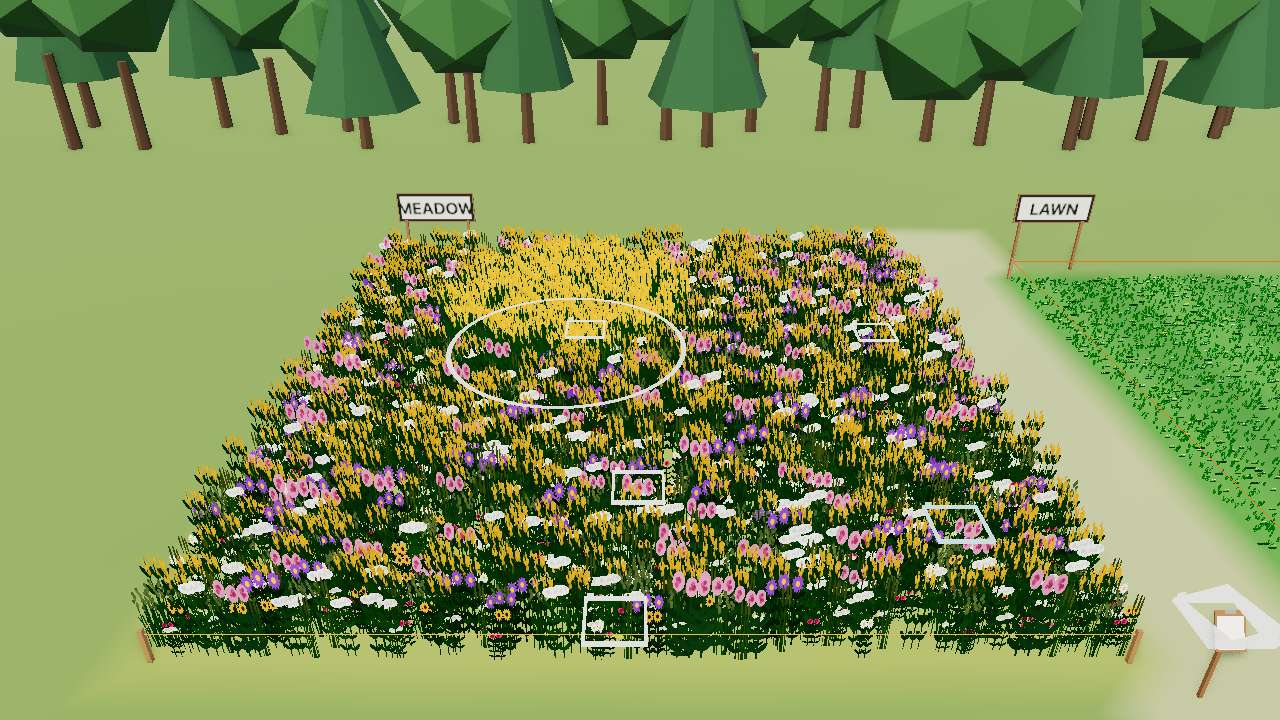
Quadrats & Biodiversity
Throw quadrats in a meadow and a lawn. Which is more diverse, and how sure are you?
- Members
Environmental
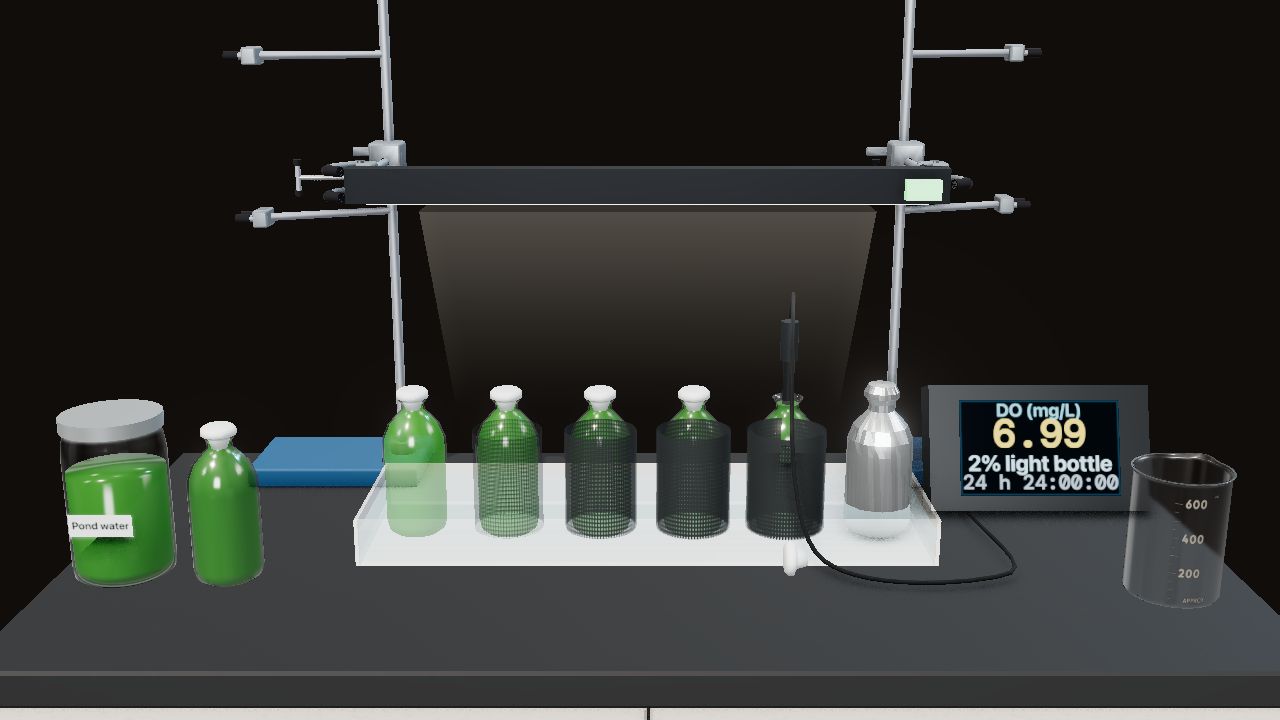
Primary Productivity
Light and dark bottles of pond water. How much oxygen do the algae make?
- Members
Environmental
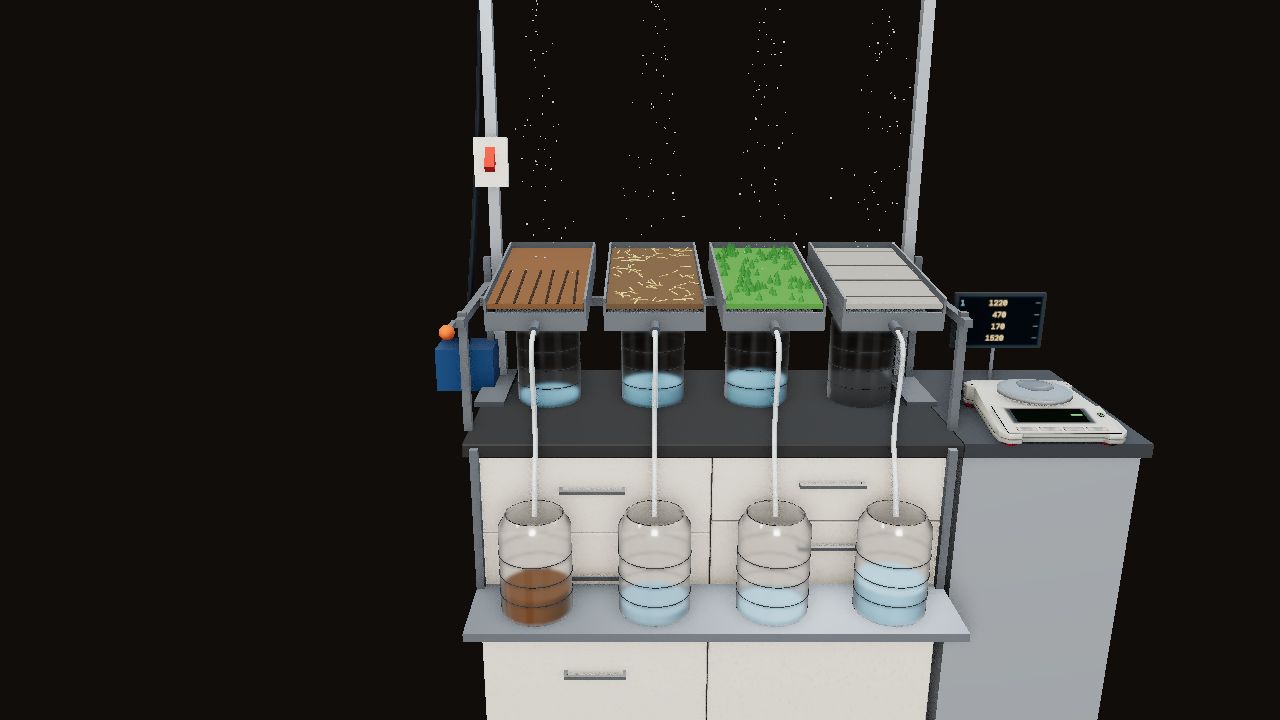
Watersheds, Runoff & Land Use
Rain on a landscape model. Clear it, plow it, terrace it, pave it, and rain again. Where does the water go?


